
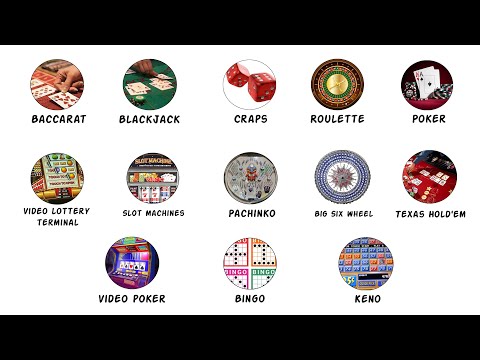
I have dedicated the last five years analyzing card-game lobbies at sports bets casino dream vegas, and the site’s selection is centered on the games that benefit from analysis rather than pure luck. Blackjack, baccarat, and several poker variants occupy the centre of the catalogue, each provided through multiple studios and rule sets. Knowing the exact pay tables, house edges, and table limits is the fastest way to turn casual play into a measured strategy, and the platform makes those details apparent before you place a single chip.
21 : Rule Changes That Really Change the Math
Blackjack remains the premier table game as its result can be influenced by choices made after the cards are distributed. At Dream Vegas Casino the lobby shows at least six rule combinations, spanning from the standard single-deck game with dealer stand on soft 17 to multi-deck editions that allow double after split. The discrepancy in house edge between these choices can go beyond one full percentage point, so the first step is to open the information panel beside each table and check the exact rules before committing funds.
Bonus Bets and the Times They Are Worthwhile
Most blackjack tables also feature side bets such as Perfect Pairs or 21+3. I regard these as separate mini-games with their own pay tables; the main hand keeps its usual 0.5 % house edge while the side bet often rises above 3 %. If the bonus payout on a suited three-card combination hits 30:1, the expected value gets better, but only if the table minimum remains low enough to keep variance reasonable.
Money Strategy for Side-Bet Tables
When I pursue the higher-paying side bets, I assign no more than 15 % of my session budget to them and keep the leftover 85 % for the base game. This allocation avoids a string of losing side wagers from emptying the entire evening’s funds. The casino’s bet-history screen lets me save CSV files, so I can analyze the actual hit rate after fifty hands and tweak the ratio if the numbers deviate from the theoretical probabilities.
Poker Game Types: Three Card Poker and Casino Hold’em
3-Card Poker and Casino Hold’em take up the midpoint between traditional poker and house-banked games. In 3-Card Poker the ante bonus rewards 8:1 on a straight flush, yet the house edge on the play bet stays over 3 % if the dealer qualifies with with queen-high or higher. I consequently muck marginal hands such as king-high hand without a qualifying hand rather than go after the bonus payout.
Hand-Ranking Reference for Rapid Choices
The site displays a compact pay-table window that shows every qualifying hand and its payout multiplier. I leave this panel visible on a secondary screen during real-time games so I don’t misread a payment. The same panel also shows the exact probability of any hand, letting me to contrast the given odds against the actual frequency and skip tables where the difference goes beyond tolerable margins.
Baccarat game: Commission Structures and Mini-Baccarat Tempo
Baccarat shows up in two different formats on the platform. Regular eight-deck baccarat takes a 5 % commission on banker wins, while specific mini-baccarat tables reduce that commission to 4 % during promotional windows. The lower commission modifies the banker bet’s house edge from 1.06 % to roughly 0.6 %, a shift big enough to notice over hundreds of coups. I consistently open the “Info” tab to confirm the current commission before selecting a table.
Betting Patterns That Endure Variance
Because baccarat rounds finish quickly, streaks of banker or player wins can persist longer than intuition suggests. I monitor shoe history on a notepad as opposed to depending on the digital trend board, which resets whenever I move tables. Recording the last twenty decisions aids me decide whether to press or decrease the stake, but I nonetheless cap any single progression at four steps to prevent an outsized loss on a single reversal.
Live Casino Versus RNG Tables: Delay and Gameplay
Any card game on Dream Vegas Casino is offered in both RNG and live-dealer formats. The RNG tables load in under two seconds on a standard broadband connection, while the live streams introduce a five-to-eight-second delay between decisions. That delay matters during blackjack double-down choices; I therefore save live tables for baccarat and roulette where decisions are restricted to betting before the deal https://www.bbc.co.uk/dna/mbarchers/html/A1080262 begins.
Per-Device Performance
On mobile browsers the live lobby utilizes adaptive bitrate streaming that reduces resolution rather than frame rate when signal strength drops. I have tried both 4G and 5G connections and found that blackjack remains playable at 480p, but the card faces become tougher to distinguish at 240p. Switching to the RNG version erases the stream entirely and restores instant feedback regardless of network conditions.
Offer Layout and Promotion Rules
The casino runs a welcome package that covers the first three deposits up to a combined maximum, followed by weekly cash-back offers based on net losses. Each bonus includes a 35-times wagering requirement applied only to the bonus portion, not the deposit. I monitor the remaining wagering volume in the promotions tab so I understand exactly how much more play is needed before funds become withdrawable.
Game-Weighting Rules That Affect Completion Speed
Not every game counts equally toward the wagering total. Blackjack and baccarat contribute at 10 % of actual bets, while slot machines count 100 %. If my goal is to meet the requirement quickly, I assign the majority of play to higher-weighted titles and use card games only for the portion of the balance that already fulfills the multiplier.
Strategy Guides Inside the Casino Lobby
Each card-game page features a “How to Play” link that displays an illustrated guide rather than a simple rule sheet. The blackjack guide explains basic strategy for every up-card combination, complete with colour-coded decision arrows. I maintain this page bookmarked on my phone so I can renew memory between sessions without leaving the lobby.
Community Stats and Leaderboards
A public leaderboard shows the top ten players by weekly net win within each card-game category. While the figures are anonymised, they reveal which rule sets are currently producing the largest payouts. I correlate those tables with the rule information to determine whether a temporary rule change or simply variance is driving the results.
Choosing the Right Table Limits for Your Bankroll
Table minimums span from 0.10 per hand in RNG blackjack to several hundred in the VIP live salons. I use the standard 1 % risk-per-hand guideline: if my session bankroll is 200, the table minimum should not exceed 2. This keeps the probability of ruin below 5 % even during a thirty-hand downswing, a figure I have confirmed through Monte-Carlo simulations of the same rule set.
Progressive Betting Systems and Their Limits
Some players use the Martingale progression after a loss. I tested a capped version that doubles up to four times before resetting. The simulation demonstrated that a 1 % house edge still generates a net loss over 10 000 hands, yet the maximum drawdown stayed within the pre-set bankroll. The key is to cease the progression at the fourth double rather than chase an eventual win that may never arrive.
Upcoming Features and Feature Roadmap
The casino’s development blog lists an upcoming multi-hand blackjack variant that will enable up to five simultaneous hands with a shared dealer card. Early screenshots reveal separate decision buttons for each hand, which should cut the time spent clicking between windows. I plan to evaluate the new format as soon as it moves from the beta lobby to the main floor.
Communication Channels That Shape Development
A dedicated suggestions portal inside the account menu enables players cast votes on proposed rule changes or new side bets. The top three ideas each month obtain a direct reply from the product team explaining whether implementation is feasible. I have filed two rule clarifications that later appeared in the updated information panels, proving that the channel is active rather than cosmetic.
Accreditation, RNG Certification, and Data Protection
Dream Vegas Casino runs under a Curaçao eGaming licence, which demands annual audits of the random-number systems used for all card games. The audit seal is shown in the footer and points to the current document issued by an independent laboratory. In contrast, the site implements TLS 1.3 security for every data transaction, apparent as the padlock symbol in the browser address field.
Player-Protection Tools That Genuinely Limit Spending
Deposit caps, session notifications, and reality assessments can be configured directly from the account panel. I enable a weekly deposit ceiling equal to 5 % of my average monthly discretionary funds; the system stops any effort to surpass that number until the following period. Reality checks interrupt play every thirty moments with a recap of elapsed period and net outcome, giving me an clear moment to decide whether to carry on.
Banking Choices and Withdrawal Scheduling
Deposits via Visa, Mastercard, and several e-wallets arrive in the account in minutes, while bank transfers can take up to two business days. Withdrawals operate on the same paths, yet e-wallet cash-outs are usually processed within twenty-four hours once verification documents are approved. The site publishes an estimated processing-time range alongside each method, so I always pick the option that matches my planned session length.
KYC Conditions Ahead of First Withdrawal
Before any withdrawal gets processed, the casino requests a government-issued photo ID and a recent utility bill. I attach these documents through the account dashboard rather than email to preserve the chain of custody in the secure portal. Once approved, the verification flag continues working for twelve months, eliminating the need to repeat the process on subsequent withdrawals.
Session Handling and Documentation
After every session I save the hand history and import it into a spreadsheet that computes actual return-to-player figures against the theoretical values. Over six months the spreadsheet has demonstrated that my blackjack results sit within 0.3 % of the expected house edge, verifying that deviations are statistical noise rather than systematic bias. This record also highlights any table where results diverge sharply, leading to a closer look at the rule set.
Establishing Exit Targets Before the First Hand
I set both a profit target and a loss limit before opening the lobby. Once one of the threshold is reached, I exit the browser tab immediately. The platform’s quick-exit button, positioned in the top-right corner, terminates the game window without needing additional confirmation clicks, lowering the chance of impulsive continuation.
Concluding Practical Checklist
Ahead of I begin any card-game session at Dream Vegas Casino, I run through a five-point list: check the current rule set and house edge, verify the payment method processing time, set both deposit and loss limits, access the strategy guide for the chosen game, and save the previous session’s history for review. Completing these steps needs less than three minutes yet removes the most common sources of unplanned losses or delays.
Quick Reference: House-Edge Snapshot
- Single-deck blackjack, dealer stands on soft 17: 0.13 % house edge
- Multi-deck blackjack, dealer hits soft 17, no double after split: 0.66 % house edge
- Regular eight-deck baccarat, 5 % banker commission: 1.06 % house edge
- Promotional mini-baccarat, 4 % banker commission: 0.60 % house edge
- Triple-Card Poker, play bet with queen-qualifier: 3.37 % house edge
- Casino Hold’em, play bet: 2.16 % house edge